Dec 16, 2010

Hasselblad 500 EL/M - First Photographs (Circus Giovanni Althoff - Heidelberg, November 1982)

..

I did a lot of mistakes in that day!
The first time that I tried to load a roll of film on the camera magazine, I lost half of its exposures. I must have forgotten to wind it to frame one, before I started shooting...
The plane of focus was obviously not correctly placed on some pictures, and I had some bad surprises about the shallow depth of field that I got in some negatives...
The shape and weight of the camera didn't help me to feel confident either. Being much different to hold than a Leica, or any 35mm SLR of that era, I didn't have yet the opportunity to master the "left-hand Hasselblad grip". As far as I remember, all these frames were done handheld.
The focusing hood was a little disorienting, with its reversed image, left-right (nowadays, it really doesn't matter if it's reversed or upside down, or whatever, I got so used to it!).
Having only twelve frames per roll, definitely seemed too short for me, at least for capturing moving subjects...
On some situations, I could have benefitted from the use of another focal distance, but all I had at the time was the normal lens, the 80mm Carl Zeiss Planar, supplied with the camera.
I also recognize that it was difficult for me to come to terms with the square shape of the format. A few pictures could be improved with some cropping... I opt to show you the full frame instead (when I die, please don't change it! This is the way that I want it!).
Fortunately, I was accustomed to fully manual controlled cameras. I also knew well my Minolta Autometer, so using an external meter was not new for me.
All I had to do, was to go out and get the pictures done! Enough of excuses for their success or failure... I was the only one to blame!
Here they are...


All the photographs above, were indeed made on the very first day that I used the Hasselblad 500 EL/M, the nice grey camera that I have introduced to you a couple of posts ago.
Two days later, I came back to make the other photographs, apparently feeling a bit more at ease.
Maybe the light was just a little better that day... Moreover the film was correctly loaded on the A12 magazine...

The Ilford HP5 negatives are hard to print on the traditional darkroom, and they surely are a pain to scan, at least for poor unskilled me and my Epson.
Yes, I am barely satisfied with the results, I should admit...
In any case, I do like some of the images, regardless of their flaws.

So I find it appealing to show you my very first atempts on using this noble camera from Sweden, a brand that so many professional photographers have cherished for generations.
A Hasselblad used to be an investment for life!

In fact, all this equipment keeps on working, as it always did on the last three decades!
We should try that with our digi-dings!...

Well, that can't be me, I believe...


To become invisible is not an easy task to accomplish, when you carry a grey Hasselblad 500 EL/M in your hands...

The noise of the motor can be rather annoying and irritating when you don't wish to catch all the attention from the neighborhood...

Despite that, I believe that most of these photographs show natural looking people, people that don't seem to be intimidated by a camera pointing at them.

They just kept doing what they had to do.


I just kept trying to do what I wanted to do!

Was I effective? The decision is left to you...


Technical data:
Camera - Hasselblad 500 EL/M (for the ones who are lazy to read the whole story...)
Lens - Carl Zeiss Planar 2.8/80mm
Film - Ilford HP5 (the old one, of course!)
Developer - Ilford ID-11, dilution 1+1
Location - Heidelberg, Germany
Date - November 1982

Scanner - Epson 4990 Photo


Circus Giovanni Althoff was in town!


..


Dec 2, 2010

11ª Bienal de Fotografia de Vila Franca de Xira - 6 Nov / 12 Dez 2010

..


Catalogue of this year's Biennial of Vila Franca de Xira


My contribution to the exhibition in the town of Vila Franca was photographed in 8x10 inches. The images that you see on this post, are actually reproductions of (second choice) contact prints, made the traditional way on photographic paper.

The color of the images was obtained with traditional toning methods: I used Agfa Viradon. I find that the real prints look somewhat more brown, than they do on my monitor, where they look a little reddish.

Who knows how do they look on yours?


Gandolfi Precision 8x10 + Rodenstock Apo-Sironar W 210mm

Fomapan 100 in Rodinal 1+50

Alcochete, May 1, 2010


Gandolfi Precision 8x10 + Schneider G-Claron 305mm

Fomapan 100 in Rodinal 1+50

Alcochete, April 26, 2010


Gandolfi Precision 8x10 + Rodenstock Apo-Sironar W 210mm

Fomapan 100 in Rodinal 1+50

Alcochete, April 26, 2010 (Mr. "Mota dos Touros")


Gandolfi Precision 8x10 + Schneider G-Claron 305mm

Fomapan 100 in Rodinal 1+50

Cruzamento Quinta da Barroca, April 26, 2010


Gandolfi Precision 8x10 + Rodenstock Apo-Sironar W 210mm

Fomapan 100 in Rodinal 1+50

Lugar das Hortas, April 26, 2010


Gandolfi Precision 8x10 + Schneider G-Claron 305mm

Fomapan 100 in Rodinal 1+50

Praia do Samouco (Baía das Mocas), May 1, 2010


Preparing the camera for the last two shots...

Now you understand why I drive a pickup... That I can look a little more crazy than I really am!

(Both location photographs courtesy of Maria Helena, who was kind enough to also give a helping hand).

..


Nov 26, 2010

Feliz Aniversário Maria Helena (26 de Novembro de 2010)

..


Um beijo de parabéns terno a uma mulher muito especial dedico, que tem paciência de santa para me aturar...

Bem haja por tudo, com Amor!


Julga-me a gente toda por perdido

vendo-me, tão entregue a meu cuidado,

andar sempre dos homens apartado

e dos tratos humanos esquecido.


Mas eu, que tenho o mundo conhecido

e quase que sobre ele ando dobrado,

tenho por baixo, rústico, enganado,

quem não é com meu mal engrandecido.


Vá revolvendo a terra, o mar e o vento;

busque riquezas, honras a outra gente,

vencendo ferro, fogo, frio e calma;


que eu só, em humilde estado, me contento

de trazer esculpido eternamente

vosso formoso gesto dentro n'alma.


Luís de Camões - "Sonetos"

..

Nov 21, 2010

Hasselblad 500 EL/M - Photo Gear (8) Hommage à Peter Borkenhagen, Uwe Feigenbutz, Friederich Hackstein and Horst Kunnert

..


I have very often expressed, in various Photography Forums, my dislike and discontent over the trend of the photographic industry to produce countless, and meaningless, limited editions of camera models.

I would speculate that my annoyance with such fashionable ways, comes principally from the fact that most of them are, well, meaningless...

So, I should possibly feel a little embarrassment, admiting that I also purchased a couple of these cameras along the years... I think that I don't have to feel contradictory, but please, read on.


My first ever Leica, was a "Leica CL 50th Anniversary", one of those special edition models that Leitz introduced in 1975, marking the 50th Anniversary of the manufacture of the Leica.

I got the complete set, used, with Summicron-C 40mm and Elmar-C 90mm. I must say that I was delighted with the camera: exceptional optical quality in a very compact set! For someone who was coming from the SLR corner with big and heavy cameras and lenses, it was a revelation! I had seen nothing better or more efficcient for my humanitarian street photography.

Then, I made the "mistake" of touching a Leica M, and there could be no return: the CL was traded for my M4-2. That was in 1979, and I never felt sorry for that decision. Somehow, every time I see a CL, my heart beats a little faster...

By the way, I do think that 50 years of Leica production was reason enough for the Leitz company to celebrate with some special edition cameras!


Another uncommon camera I got around that time, was the Hasselblad 500 EL/M "20 Years in Space" that I have pictured on these photographs. It was produced to celebrate the use of Hasselblad cameras by the NASA, between 1962 and 1982: 2 Hasselblad EL electric cameras were used for the first time on Apollo 8, in 1968, bringing back 1100 photographs from the mission. Kodak was even asked by NASA to develop thin new films with special emulsions! Needless to say, many of these improvements on equipment, and films, have found their way on our consumer products.

The "20 Years in Space" consisted on a limited edition of 1500 cameras with grey leather covering, in the style of the cameras used by the Apollo Space Program (The leatherette was actually removed and replaced by metal plates, on the cameras sent to space. At first, the cameras had black anodized surfaces to eliminate reflections. Later on, the outer surface of the 500EL data camera was colored silver to help maintain more uniform internal temperatures in the extremes encountered on the moon. The conventional lubricants were also replaced with low friction materials, or eliminated, because they would boil off in the vacuum).

About a dozen Hasselblad/NASA cameras were left on the surface of the moon. Only the film magazines were brought back... Who gives me a ride to Tranquility Base?

The special edition you see here is, of course, the "normal" camera, except for the leatherette and the shutter-release button, which was also unusual for the 500 EL/M that you found on the normal consumer market (the subsequent civilian models also adopted the astronaut style, I should note).

The camera was supplied with the first-class Planar 2.8/80mm by Carl Zeiss, and A12 film magazine. It came in a special golden box, with certificate and battery charger.

Being rather "affordable" these days (the normal version, I mean), the main drawback of the Hasselblad 500 EL/M, is that it needs special rechargeable batteries, and they are hard to find and expensive. It is also not cheap to convert the cameras to use other types of batteries.

Only in 1988, with the introduction of the 553 ELX, the electric Hasselblads started to use five AA/R6 alkaline battery cells with 1,5 volts. Please, be aware of that.


Above shots made with Canon 30D + Leitz 4/200mm Telyt

(lens made in 1961! For the Visoflex)

+ 14167 Leitz Adapter + Enjoyyourcamera adapter


Both Leica CL and Hasselblad 500 EL/M, were sold to me by a great photographic artist, namely Peter Borkenhagen. Being a trained portrait photographer, Borkenhagen worked in some fine Fotogeschäfte in Heidelberg. He was the best photographic equipment seller that you can dream of: not only friendly and honest, but also knowledgeable and extremely competent. You can surely trust Peter's opinion. All photographic community around Heidelberg respects him very much.

At heart and soul, Borkenhagen is an Artist!

I didn't see, or have any contact with him, for some years now. I can imagine that he maybe is retired from his salesman activity...

I have no doubt, though, that his Art is going strong, and that he keeps being an engaged Artist, with capital A !


Uwe Feigenbutz was a friend of ours. He ran a kind of itinerant gallery ("x. producer's Gallery"), and he organized some exhibitions of our work, very often having the support of a jazz combo, in the pursuit of a broader artistic experience.

Together with Friederich Hackstein who, I believe, still runs London Pub in Lampertheim, Bundesland Hessen, we constituted a curious quartet of different photographic styles: Peter Borkenhagen would heat his Polaroids or literally burn his negatives (chemically and with fire!), before making his own prints, Hackstein would show his abstract Polaroid nudes, Uwe would typically display serigraphies, and I was the "conservative" one, with my straight photography.

We went to Ljubljana, Lisbon, Lampertheim, Heilbronn... Sometimes all four, other times just two of us, some other times maybe alone. Nevertheless, I think that we made a skilled group of talents!

Then I came back to Portugal, Uwe sadly passed away...


The above exhibition was made possible with the help of the american photographer Kristi Eisenberg, Coordinator of the Photography Program at Cecil Community College, Maryland, USA.

Thank you Kristy, it was very kind of you!


Mr. Horst Kunnert wrote an article about my photographs on the magazine "Leica Fotografie", nr. 3/1983 (Umschau Verlag, Frankfurt/am Main). I only have the french edition with me, where the article is entitled "Un Amateur Engagé". I remember spending a nice afternoon in Mr. Kunnert's home, in the balcony, while some enthusiastic conversation about Photography was going on.

"Ses photos noir et blanc m'avaient vivement impressioné et éveillé ma curiosité. Qui pouvait-il être, celui qui avec autant de doigté réussissait d'aussi subtiles photos de personnes?", started the kind words of Mr. Kunnert. I was 27 years old...

On my part, I mentioned Josef Koudelka, Cartier Bresson, Robert Frank, William Klein, Bruce Davidson, Eugene Smith, André Kertesz, Robert Doisneau, Don McCullin, as my biggest influences then... I think that I certainly had good taste at 27...

I wasn't yet into large format. As you might imagine, the list grew a little longer along the years...But those names still remain among my favourites, I should tell!

The above portrait of Mr. Kunnert was photographed some years later, on April 1st, 1990.


Both headshots were made during a workshop with Fotoclub Meckesheim, organized by Peter Borkenhagen. He would do his experimental photographs and Polaroids, I would teach some lighting technics for portrait photography. Obviously, on both examples, I was demonstrating how to use only one light source (Hensel Monoflash 800) with a normal reflector...
Film material was Kodak T-Max 100.
Shooting camera was also a Hasselblad, this time the 500 C/M, with Carl Zeiss Sonnar 4/150mm.

Such a workshop would take a weekend of work, but it surely was rewarding to see the enthusiastic involvement of all participants.

I am sorry to say, but I forgot the name of the gentleman with the wonderful moustache. He absolutely looked fantastic!


Above image shot with Canon 30D + Micro-Nikkor 2.8/55mm

+ enjoyyourcamera adapter


Another shot of the Hasselblad 500 EL/M, in the way that I prefer to use the camera: with the traditional EL shutter button and, simultaneously, with electric cable release, so that I can quickly switch between both at will.

I am not that big fan of the square release...

To conclude this already long post, allow me to say hello to all the nice people involved: it was good to know you all, and I hope that we meet again soon!

Tschüss!


..


Nov 18, 2010

Flor da Rosa, Crato - Carrilho da Graça (Wasted Project 2)

..


When I came back to Portugal in 1990, after living in Germany for many years, the first architecture photographs I made, were assigned by the architect Manuel Tainha. I should photograph his just built Faculdade de Psicologia e de Ciências da Educação, Universidade de Lisboa.

It just so happened that the publisher, and also architect, Luiz Trigueiros from Editorial Blau, saw the images and liked them. He subsequently asked if I wanted to work for his magazine "Architécti" (by that time a really fine publication), and offered me two assignments: the above mentioned work by Tainha and the Piscina Municipal de Campo Maior, by João Luís Carrilho da Graça.

Photographing the works of these two master architects, I got started in Architecture Photography. Not a bad start, I could dare to say...


Around 2004, I thought about doing a White & Blue book on the recovery and conversion of the Flor da Rosa Monastery in Crato, Alentejo, into a Pousada, by Carrilho da Graça.

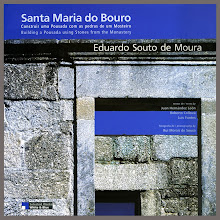
On my mind, it would be a fabulous companion book for my other publication about Santa Maria do Bouro, also a conversion of a Monastery into a Pousada, in Amares, by Eduardo Souto de Moura. Both are outstanding works, having their origins in historic buildings.

Well, I do love that!


The necessary steps were undertaken: I met João Luís who agreed to colaborate on the project, permissions and arrangements to photograph the building were granted, film was ordered, and so on and so on...

After many images were shot in 2005, the excellent designer Francisco Vaz da Silva, from Aveiro, made an interesting mock-up. Everything was looking good, and I thought that I could soon publish another book!

Then the wheel of fate started turning the other direction, things started going bizarre, and for many reasons I don't wish to detail, sometimes I don't even understand myself, the book never took form.

One more wasted project!

My loss, for sure!, nobody's gain, I guess...


Some fellow photographers claim that they don't like to talk about their equipment or methods. Some even say that they don't care about technical issues. How grateful they must be!

These fellows often excuse their relutance on talking about technic, with the explanation that only the image counts, and nothing else matters. While I might understand that point of view, with some of them I have to ask if they have technical knowledge at all...

I permit myself to be silly and disagree: yes, equipment and technic count!


I am not a magician and I don't have tricks upon my sleeves, I don't pull secret rabbits out of my hat!

I am a photo-freak with nothing to hide!

Are you perhaps eager to learn more about what kind of gear I used to make the above photographs? Look at the list below (I hope that I won't forget something important, I very often do!):

- Gandolfi Variant with 6x12 Horseman roll film back, and Linhof 6x7 Rapid Rollex (as the names imply, 6x12 and 6x7 formats); Schneider lenses.

- Horseman SW612 Pro (6x12 format, also doubles duty as 6x9 camera); Rodenstock lenses.

- Corfield WA67 (6x7 format) with fixed Schneider Super Angulon 47mm.

- Hasselblad 500 C/M (format 6x6); Carl Zeiss lenses.

- Film: Kodak Ektachrome 120.

- Light meter: Gossen Variosix F.

- Color meter: Gossen Color Master 3F.

- CC and LB Filters: Rodenstock.

- Tripods: Gitzo and Manfrotto.

- Lighting equipment: Hensel.

Got an idea?

Now a little joke, and food for thought, for imaginary clients: would you find it correct to pay me the same for this kind of service, as if I only took my Canon digi and a little tripod along?

No? Well, a lot of people do...


Oh, by the way, where was my digi-ding-a-dong-dings-bums?


P.S.: A very special thank you goes to my son Luís who assisted me on the photographic sessions and all the people involved, mainly the staff personnel at Flor da Rosa, who were always very kind and helpful.

Have fun!

..